Signed in as:
filler@godaddy.com
August 2026
Dear Graduate Student,
If you’re reading this message, chances are you’re considering stepping into the world of graduate research competitions (GRCs)—perhaps the Three Minute Thesis (3MT), FameLab, or Falling Walls. As you reflect on the decision, you’re likely fueled by a mix of curiosity, ambition, and yes, the desire to win.
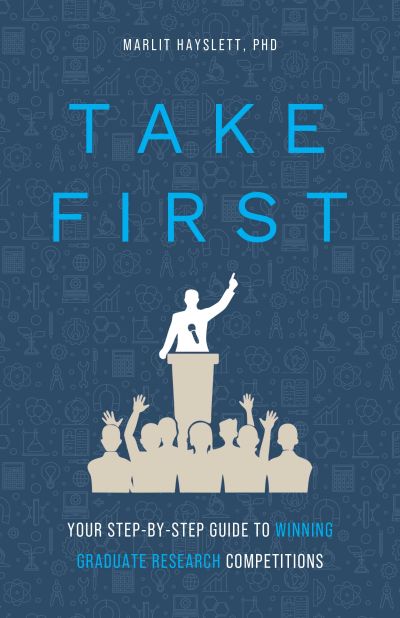
Take First: Your Step-by-Step Guide to Winning Graduate Research Competitions (going forward I will refer to it as Take First!) is filled with strategies, tools, and insights designed to help you share your research in a way that resonates far beyond your field. Whether you’re presenting to fellow scholars, business professionals, or friends over dinner, Take First! will help you translate your complex ideas into clear, compelling stories that your audiences can remember.
Speaking of stories...
Not too long ago, I was talking to a friend and colleague from Poland about the Take First! program. She asked me how I had come up with the title, Take First!. This was one of those moments when the light bulb goes off in your head as a communicator: I sensed something was not right. I explained that when you are talking about a competitive situation in English, you might hear someone ask "How did she do in the event?" The reply might be "She took third place." This story reminds me that cultural differences are real, and the best way to identify them is to test them ahead of time.
So why did I keep the title? Because we all need aspiration, we all need goals, we all need words that motivate us. The truth is that even if you don't take first in your GRC, you still win because you have invested in yourself, in becoming an effective communicator of your research. This translates to job opportunities, collaborations, grants, and professional awards. Even though it is designed as an 8-week program, the skills you develop will last and grow throughout your career.
A logistical comment on using the website: Everything is organized by week.
Whether your goal is to take home a trophy or to do justice to the work you care about, know that entering a GRC is itself a bold step. You’re not just competing—you’re growing, learning, and making your research more accessible to the world.
Let's get started with a quick GRC 101!
Warmly,
Marlit Hayslett, PhD
Contact: take.first.in.your.grc@gmail.com