• Home
  • Start here
  • Take First Program
    • GRC 101
    • Week 1: Start Winning Now
    • Week 2: Your GRC Message
    • Week 3: Slides and Props
    • Week 4: Deliver Your Talk
    • Week 5: Rehearse Solo
    • Week 6: Rehearse w/Group
    • Week 7: Preliminary Phase
    • Week 8: Final Competition
    • After the competition
  • Weekly Exercises
    • Week 1 Exercises
    • Week 2 Exercises
    • Week 3 Exercises
    • Week 4 Exercises
    • Week 5 Exercises
    • Week 6 Exercises
    • Week 7 Exercises
    • Week 8 Exercises
  • Weekly Task Checklists
    • Download ALL Weeks
    • Week 1
    • Week 2
    • Week 3
    • Week 4
    • Week 5
    • Week 6
    • Week 7
    • Week 8
  • Take First Toolkit
  • Advice from Winners
  • FAQs
  • About
  • Acknowledgements
  • More
    • Home
    • Start here
    • Take First Program
      • GRC 101
      • Week 1: Start Winning Now
      • Week 2: Your GRC Message
      • Week 3: Slides and Props
      • Week 4: Deliver Your Talk
      • Week 5: Rehearse Solo
      • Week 6: Rehearse w/Group
      • Week 7: Preliminary Phase
      • Week 8: Final Competition
      • After the competition
    • Weekly Exercises
      • Week 1 Exercises
      • Week 2 Exercises
      • Week 3 Exercises
      • Week 4 Exercises
      • Week 5 Exercises
      • Week 6 Exercises
      • Week 7 Exercises
      • Week 8 Exercises
    • Weekly Task Checklists
      • Download ALL Weeks
      • Week 1
      • Week 2
      • Week 3
      • Week 4
      • Week 5
      • Week 6
      • Week 7
      • Week 8
    • Take First Toolkit
    • Advice from Winners
    • FAQs
    • About
    • Acknowledgements
  • Sign In
  • Create Account

  • My Account
  • Signed in as:

  • filler@godaddy.com


  • My Account
  • Sign out

Signed in as:

filler@godaddy.com

  • Home
  • Start here
  • Take First Program
    • GRC 101
    • Week 1: Start Winning Now
    • Week 2: Your GRC Message
    • Week 3: Slides and Props
    • Week 4: Deliver Your Talk
    • Week 5: Rehearse Solo
    • Week 6: Rehearse w/Group
    • Week 7: Preliminary Phase
    • Week 8: Final Competition
    • After the competition
  • Weekly Exercises
    • Week 1 Exercises
    • Week 2 Exercises
    • Week 3 Exercises
    • Week 4 Exercises
    • Week 5 Exercises
    • Week 6 Exercises
    • Week 7 Exercises
    • Week 8 Exercises
  • Weekly Task Checklists
    • Download ALL Weeks
    • Week 1
    • Week 2
    • Week 3
    • Week 4
    • Week 5
    • Week 6
    • Week 7
    • Week 8
  • Take First Toolkit
  • Advice from Winners
  • FAQs
  • About
  • Acknowledgements

Account


  • My Account
  • Sign out


  • Sign In
  • My Account

Week 8: The Final Competition

 We’re here. It’s the big finale. If you made it to your final competition, well done!!! 


Even if you did not advance, please keep reading. There are some poignant words of wisdom from our previous GRC competitors that may shed fresh light on your own experience. And Exercise 8.6 is for you too!


Since you made it to the finals, you are capable of winning. Know that. All your hard work, preparation, and practice have led you to this moment. You’ve poured your passion into your research, honed your presentation skills, and embraced every challenge along the way. Now, it’s time to step onto the stage and let your brilliance shine. 


If you are about to compete in the final round, it might help to connect with some people who have been in your shoes before. After the Goals for the week, take a couple of minutes and read the advice of your graduate student peers who competed in GRCs and won. I would wager that even if their words are not inspiring (and some of them are!), they will certainly be comforting. And who doesn't need a little comfort right now?

Week 8 Goals

To achieve your goals in Week 8, you will need approximately five hours to complete the exercises, including buffer hours:  

  • Continue rehearsing. (Exercise 8.1)
  • Compete in the final round of your GRC competition. (Exercise 8.3)
  • Support your fellow competitors by encouraging them. (Exercise 8.4)
  • Plan to reward yourself after your talk. (Exercise 8.6)

Advice from Winners

Shannon Brady, 1st place, Grad Slam 2024, University of California, Riverside, U.S.A

Iris Garcia-Pak, 1st place, Grad Slam, 2024, University of California at San Diego, U.S.; 1st place, Grad Slam University of California system-wide competition

Kelly Finke, winner, Princeton Research Day, 2024, Princeton University, New Jersey, U.S.A

 “Definitely the first one would be to have fun with it, because if you’re not having fun, the audience won’t have fun with you.”

Kelly Finke, winner, Princeton Research Day, 2024, Princeton University, New Jersey, U.S.A

Iris Garcia-Pak, 1st place, Grad Slam, 2024, University of California at San Diego, U.S.; 1st place, Grad Slam University of California system-wide competition

Kelly Finke, winner, Princeton Research Day, 2024, Princeton University, New Jersey, U.S.A

“Number one advice is definitely do it. This has been the thing that people have come back to me most about over my entire PhD. Someone even offered me a job.”

Iris Garcia-Pak, 1st place, Grad Slam, 2024, University of California at San Diego, U.S.; 1st place, Grad Slam University of California system-wide competition

Iris Garcia-Pak, 1st place, Grad Slam, 2024, University of California at San Diego, U.S.; 1st place, Grad Slam University of California system-wide competition

Iris Garcia-Pak, 1st place, Grad Slam, 2024, University of California at San Diego, U.S.; 1st place, Grad Slam University of California system-wide competition

“Try and go back to your fresh self. Remember why you’re excited about this field or excited about this project, because there’s something that caught you. If you can capture that in your speech, that helps a lot."

Ainul Huda, winner, Nutshell Games, 2024, Virginia Tech, Blacksburg, Virginia, U.S.A

Pewee Datoo Kolubah, 1st place, Falling Walls, 2024, King Abdullah University of Science and Technology, Saudi Arabia; 2nd place, Falling Walls Berlin, 2024

Iris Garcia-Pak, 1st place, Grad Slam, 2024, University of California at San Diego, U.S.; 1st place, Grad Slam University of California system-wide competition

“Keep it as simple as possible. Minimize jargon. Practice without a script. Try to finish with something strong and memorable.”

Eliška Jandová, 1st place, FameLab, 2022, Charles University, Czech Republic

Pewee Datoo Kolubah, 1st place, Falling Walls, 2024, King Abdullah University of Science and Technology, Saudi Arabia; 2nd place, Falling Walls Berlin, 2024

Pewee Datoo Kolubah, 1st place, Falling Walls, 2024, King Abdullah University of Science and Technology, Saudi Arabia; 2nd place, Falling Walls Berlin, 2024

 “Definitely be authentic.  I stumbled across some performances that were very theatrical. You get to chat with [competitors] before the performances, and they came across as one person before the performance, and another during the performance. The audience knows that, so it’s always about the authenticity.”

Pewee Datoo Kolubah, 1st place, Falling Walls, 2024, King Abdullah University of Science and Technology, Saudi Arabia; 2nd place, Falling Walls Berlin, 2024

Pewee Datoo Kolubah, 1st place, Falling Walls, 2024, King Abdullah University of Science and Technology, Saudi Arabia; 2nd place, Falling Walls Berlin, 2024

Pewee Datoo Kolubah, 1st place, Falling Walls, 2024, King Abdullah University of Science and Technology, Saudi Arabia; 2nd place, Falling Walls Berlin, 2024

“Be yourself. Know that this is your research. You are the expert in your research and you got this. Just go there and do what you can do. But then most importantly, practice and practice and practice, because practice is important.”

Dirk Lauinger, 1st place, Research Slam, 2023, Boston, Massachusetts, U.S.A.

Dylan McClung, winner, Share Your Research, 2022, University of California, Berkeley, U.S.A

Dylan McClung, winner, Share Your Research, 2022, University of California, Berkeley, U.S.A

“Practice. Practice makes perfect. It’s really the thing.”

Dylan McClung, winner, Share Your Research, 2022, University of California, Berkeley, U.S.A

Dylan McClung, winner, Share Your Research, 2022, University of California, Berkeley, U.S.A

Dylan McClung, winner, Share Your Research, 2022, University of California, Berkeley, U.S.A

“I would say that the first thing would be to trust your gut. I took a leap of faith doing it in drag, and trying to combine drag with science, which I had never seen done before. I was very nervous, but it paid off. The second thing is to be comfortable being uncomfortable. Try to push yourself out of your comfort zone and try something new.”

Dina Rogers, 1st place, Falling Walls Berlin, 2024, Dalhousie University, Canada

Dylan McClung, winner, Share Your Research, 2022, University of California, Berkeley, U.S.A

Princeton Vaughn, winner, Princeton Research Day, 2024, Princeton University, New Jersey, U.S.A.

“[The competition is] a very good exercise, especially as you start to progress as a researcher, pursue an academic career, even industry. No matter which way you end up going, the communication piece is never going to fail you, right?”

Princeton Vaughn, winner, Princeton Research Day, 2024, Princeton University, New Jersey, U.S.A.

Princeton Vaughn, winner, Princeton Research Day, 2024, Princeton University, New Jersey, U.S.A.

Princeton Vaughn, winner, Princeton Research Day, 2024, Princeton University, New Jersey, U.S.A.

“It’s not important to explain every single technical detail of your work. What’s important is that your audience walks away with what you want them to walk away with. That requires a lot of personal reflection and sitting down with yourself and being honest about these three main points that I want my audience to walk away with.”

Prescott Vayda, winner, Nutshell Games, 2024, Virginia Tech, Blacksburg, Virginia, U.S.A.

Princeton Vaughn, winner, Princeton Research Day, 2024, Princeton University, New Jersey, U.S.A.

Prescott Vayda, winner, Nutshell Games, 2024, Virginia Tech, Blacksburg, Virginia, U.S.A.

“Just do it. The single most important thing that has helped me improve my communication ability is doing it over and over and over and over again. Because the first time is never going to be perfect.  It doesn’t matter if you get up there and you freeze for 30 seconds, you were up there and that’s something to be proud of.”

Advice from a GRC Organizer

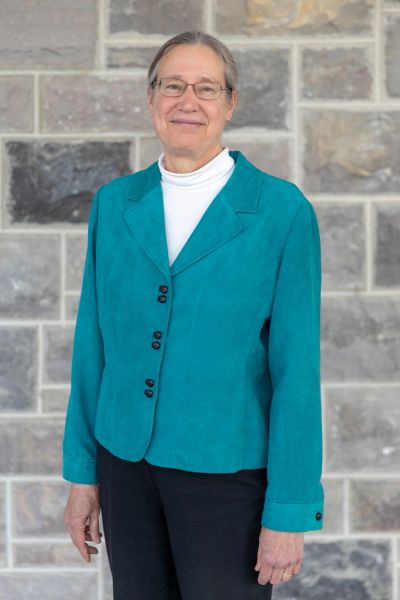
Now that we’ve heard insights from GRC competitors, let’s turn to someone who has seen the competition from another perspective: Dr. Carrie Kroehler, associate director of the Center for Communicating Science at Virginia Tech—the organization behind the Nutshell Games. Since 2017, Carrie has helped to organize at least 10 Nutshell Games and has observed several hundred GRC talks. She knows what makes a research talk truly effective. Here are her top tips:


“I would recommend that people not memorize their talk but know the beginning and the end. If you get flustered or momentarily lost in the middle, but you know what your take-home message is, you can get yourself back on track and still have your strong ending.


Not memorizing is not the same as not preparing. You should prepare and rehearse. Say it in the shower, and say it while you’re walking across campus, and say it to whomever will listen, and let it be a little bit different every time. This way you become more and more comfortable with your talk. 

Don’t cram too much into it - talking faster doesn’t land with the audience.


Think about how the thing that you’re going to say is going to connect with the audience. Why are they going to think that what you have to say is important and worth hearing? That requires thinking about why your research is important. 


Finally, be clear about how you hope to change the audience. What do you hope people will do differently as a result of having heard your talk?”

Week 8 Takeaways

Here are the key takeaways from Week 7:


1. Celebrate reaching the finals, and trust your preparation. 

If you’ve made it this far, you’re capable of winning. Believe in your journey, and let your hard work and passion shine on stage.


2. Authenticity and simplicity matter. 

Be yourself, minimize jargon, and focus on clear, meaningful communication rather than technical detail overload.


3. Practice is non-negotiable.

Nearly every past winner emphasized the value of consistent, repeated practice in various settings to build confidence and fluency.


4. Connect with your audience.

Great talks focus on leaving the audience with clear, intentional takeaways and making them care about the research’s impact.


5. Take creative risks and have fun. 

Whether it’s trying a new presentation style or simply enjoying the moment, letting your enthusiasm and originality show can make your talk more memorable and effective.

Week 8 is DONE!

is k bi iTehC Week 4 Checklist and reflection questions.

is kjgdhfgkjhglskjfhgn 


Copyright © 2026 Take First: Your Step-by-Step Guide to Winning Graduate Research - All Rights Reserved.

Powered by

This website uses cookies.

We use cookies to analyze website traffic and optimize your website experience. By accepting our use of cookies, your data will be aggregated with all other user data.

DeclineAccept

